Monday, November 25, 2013

Watch The Maiden Flight Of An 18-Propeller Copter


This helicopter-with-antlers is a test vehicle, made by the German company e-volo. It's battery-powered and emissions-free, according to the company. This is the first time it has flown.
The e-volo folks call the craft a volocopter. It works on the same principles as the quadcopter drones we've seen, except it's much, much larger. That cockpit there has seats for two people.
In an indoor test November 17, the company says it flew the volocopter—by remote control, without any passengers—nine times for a total airtime of 20 minutes.
The company plans eventually to produce and sell volocopters. Engineers are aiming for a craft that has a cruising speed of at least 54 knots, is able to fly up to 6,500 feet, can carry up to 992 pounds (450 kilograms), and flies for at least an hour. Those in Germany with a private pilot license should be able to fly it.

Leading performance and superior code density for new microAptiv-based PIC32MZ 32-bit MCU family from Microchip


The PIC32MZ comes fully loaded with up to 2MB of Dual-Panel Flash with Live Update, 512KB SRAM and 16KB Instruction cache and 4KB data cache memories. This newest family in the PIC32 portfolio also offers a full suite of embedded connectivity options and peripherals, including 10/100 Ethernet MAC, Hi-Speed USB MAC/PHY (a first for PIC® MCUs), audio, graphics, crypto engine (supporting AES, 3DES, SHA) and dual CAN ports, all vital in supporting today’s complex applications.

By transitioning to the new MIPS microAptiv core, the PIC32MZ family offers a more than 3x increase in performance and better signal processing capabilities over the previous M4K-based PIC32MX families. In addition, the microAptiv core includes an Instruction Set Architecture (ISA) called microMIPS that reduces code size by up to 30% compared to executing 32-bit only code. This enables the PIC32MZ to load and execute application software in less memory.

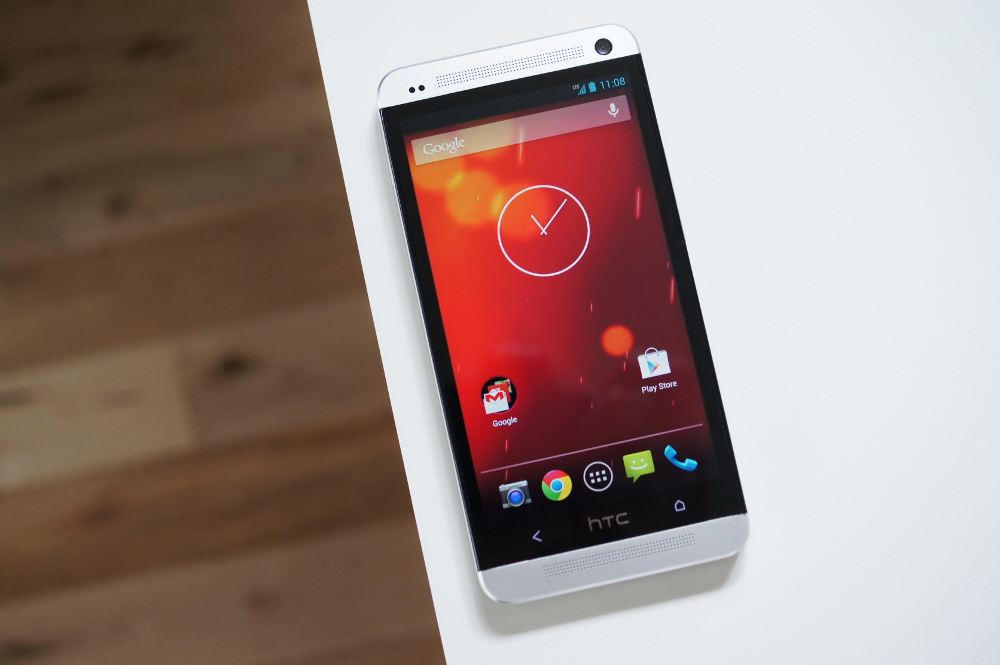
HTC One Google Play Edition Gets Android 4.4 Kit Kat, Galaxy S4 GPE Shouldn’t be Far Behind


When Google announced their two Google Play Edition devices, the HTC One and Galaxy S4, they told us to expect timely updates. People questioned them because the updates potentially needed an extra set of eyes or two before being released, but Google said to us directly that they would be working “very closely” with both HTC and Samsung to make things happen. So far, they have delivered on that promise. Android 4.3 showed up within a week of being announced. Today, we’re less than a month out from the unveiling of Android 4.4 “Kit Kat” and the HTC One GPE is already seeing the update. 
If you want to sideload the file, you can grab it here as a direct link from Google. A guide on using the “adb sideload” command can be found here.
Also worth noting, is the release of kernel source files for not only the HTC One GPE, but the Galaxy S4 GPE as sell.